

How Ultrasonic metal welding for Tube Sealing applications Enhances Quality and Leak-Proofing in Refrigerators
- robintek
- December 15, 2025
In the refrigeration industry, the final step of production—sealing the charging tube—is where many quality issues are born. For years, manual brazing with silver solder was the standard, but it brought risks of internal contamination, high energy costs, and leaks.
Ultrasonic Metal Welding (UMW) has transformed this step by replacing the torch with high-frequency vibrations. Here is how it specifically enhances refrigerator quality and ensures a lifetime of leak-proofing.
1. Eliminating “Black Scale” Contamination
One of the biggest silent killers of a refrigerator compressor is internal oxidation, or “black scale.”
- The Problem with Brazing: When you heat a copper tube with a torch, the oxygen inside the tube reacts with the heat to form flakes of copper oxide. These flakes can travel through the system and clog the microscopic opening of the capillary tube.
- The UMW Solution: Because ultrasonic welding is a solid-state process, the metal remains well below its melting point. No extreme heat means no oxidation. The inside of the tube stays as clean as the day it was manufactured, protecting the compressor’s long-term health.
2. Hermetic Reliability Through Molecular Diffusion
Standard welding creates a joint by melting materials together. Ultrasonic welding, however, uses high-frequency “scrubbing” to create a bond at the molecular level.
- Oxide Removal: The vibrations physically scrub away surface oxides and contaminants at the weld interface, exposing pure metal-to-metal contact.
- Zero Leak Path: The result is a true metallurgical bond that is essentially one solid piece of metal. Unlike brazing, which can have “pinhole” leaks if the filler metal doesn’t flow perfectly, UMW produces a consistent, gas-tight seal every time.
3. Safety with “Green” Refrigerants (R600a)
Modern refrigerators increasingly use Isobutane (R600a) or Propane (R290) because they are eco-friendly. However, these gases are highly flammable.
- Flame-Free Environment: Bringing a 450°C+ brazing torch near a refrigerant charging station is a major safety hazard.
- Explosion-Proof Technology: Ultrasonic sealers generate zero sparks and no open flames. Many high-end units are even built with Explosion-Proof (EX) certification, allowing them to operate safely in “Zone 2” environments where flammable gas might be present.
4. Real-Time Quality Control (The “Smart” Seal)
With manual brazing, the only way to know if a seal is good is to perform a separate leak test afterward. If it fails, the unit is scrapped or requires expensive rework.
- Monitoring Parameters: Ultrasonic machines monitor three critical variables for every single weld: Time, Energy, and Power.
- Automatic Rejection: If the tube is missing, too thin, or contaminated, the machine detects a deviation in the “weld signature” and stops the line instantly. This ensures that 100% of the units leaving the station meet the required quality standard.
UMW vs. Brazing: A Performance Breakdown
| Feature | Ultrasonic Tube Sealing | Traditional Torch Brazing |
| Heat Input | Minimal (No melting) | High (Red hot) |
| Process Speed | < 1.0 Second | 20–30 Seconds |
| Internal Scale | None (Clean system) | High (Requires nitrogen purging) |
| Human Error | Low (Automated) | High (Operator dependent) |
| Safety | Spark-free / EX Certified | Fire / Burn hazard |
Related Topics:
Featured Products
CLC Busbar Termination Welder
US-6020FWB
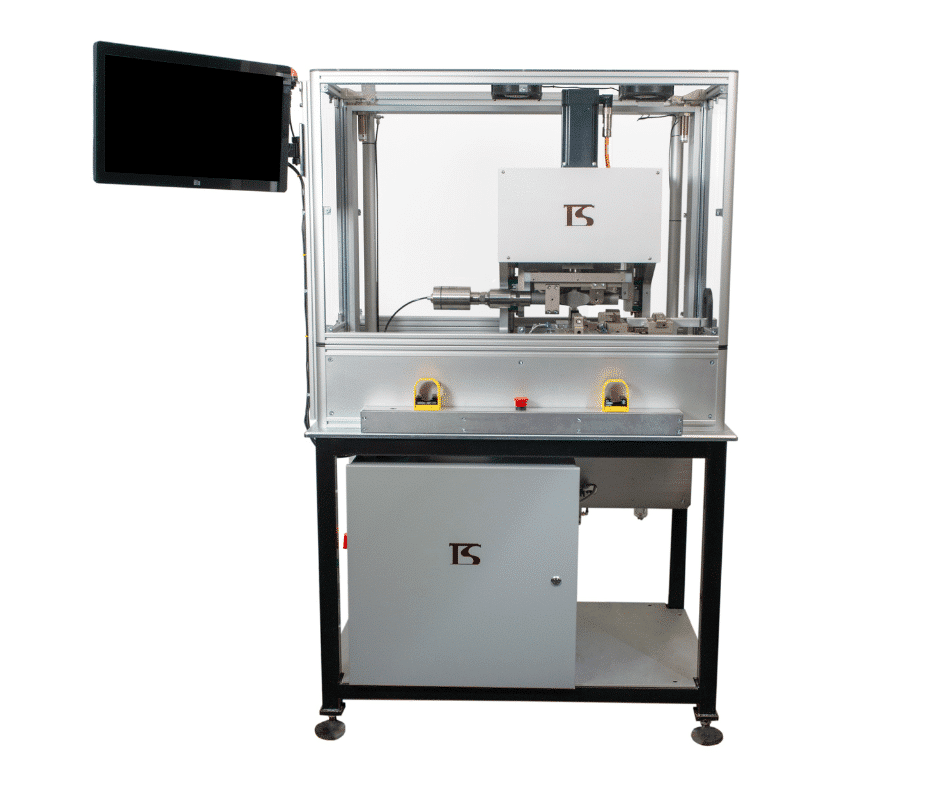
CLC Large Cable Termination Welder
US-3620STH