
Choosing the Right Ultrasonic Wire Splicer for Automotive Wire Harnesses
In the fast-evolving automotive industry, the transition to Electric Vehicles (EVs) and the increasing complexity of onboard electronics have placed a spotlight on the reliability of wire harnesses. Traditional joining methods like crimping or resistance welding are often no longer sufficient to meet the rigorous electrical and mechanical standards of modern vehicles.
Ultrasonic wire splicing has emerged as the industry standard, offering a solid-state metallurgical bond that ensures superior conductivity and durability. However, choosing the right equipment—such as the advanced solutions provided by TECH-SONIC—requires a deep understanding of your production needs. This guide explores the key factors to consider when selecting an ultrasonic wire splicer for automotive applications.
1. Understanding Ultrasonic Metal Welding
Unlike traditional welding, ultrasonic wire splicing does not use heat, solder, or consumables. Instead, it uses high-frequency vibrations to disperse surface oxides and create a pure molecular bond between non-ferrous metals. For automotive manufacturers, this means a “clean” connection with the lowest possible voltage drop and high thermal conductivity—critical for the sensitive sensors and high-voltage systems found in modern cars.
2. Evaluate Your Cross-Section Requirements
One of the first technical specifications to consider is the range of wire cross-sections your production line handles. Different machines are optimized for different “windows” of wire sizes:
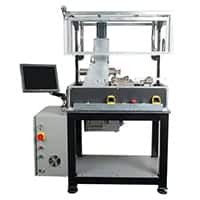
- Standard Splicing: Machines like the TS20 W and the TS-20W Plus are excellent for entry-level or versatile applications, typically covering a range from 0.5mm² to 34mm².
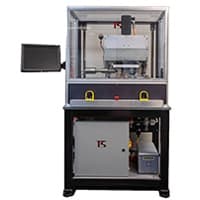
- Heavy-Duty and EV Applications: For electric vehicles that require high-voltage cables and larger wire bundles, you may need a system like the US-3620WS2P, which can handle cross-sections up to 60mm² without requiring a tooling change.
Ensuring your splicer can accommodate your entire range of wire gauges without constant reconfiguration is key to maintaining high throughput.
3. The Power of Closed-Loop Control (CLC)
The most significant advancement in recent years is the shift from pneumatic systems to Closed-Loop Control (CLC) technology. In a traditional pneumatic splicer, the force is applied via an air cylinder, which can sometimes result in inconsistent pressure or “over-stressing” the wire strands.
TECH-SONIC’s patented CLC technology replaces the pneumatic cylinder with a Servo Motor. This allows for:
- Multi-step welding: You can adjust the force and amplitude during the weld cycle, rather than using a single “blast” of energy.
- Energy Efficiency: These systems operate at significantly lower energy levels than resistance welding.
- Extended Tooling Life: Because the servo motor applies force more precisely, there is less wear and tear on the horn and anvils, with some tooling lasting over a million cycles.
4. Precision and Quality Control (USCAR-45 Compliance)
In the automotive world, quality is non-negotiable. The USCAR-45 standard defines the performance requirements for ultrasonically welded wire-to-wire splicing. When choosing a splicer, look for integrated quality monitoring features:
- Missing Strand Detection: High-end models can detect if even a single strand is missing (often defined as less than 3% of the total cross-section). This is vital for preventing “hot spots” in a harness that could lead to vehicle failure.
- Data Logging: Ensure the machine can log and export weld height, energy, and time for every single splice. This “traceability” is a requirement for many Tier 1 automotive suppliers.
- Pre-weld and Post-weld Height Measurement: This ensures the wires are positioned correctly before the weld begins and that the final joint meets exact thickness specifications.
5. Ease of Use and Maintenance
Production floor efficiency depends on how quickly operators can set up and maintain the equipment. Features to look for include:
- Graphic Splice Editors: A user-friendly interface that shows insulation colors and wire layouts helps reduce operator error.
- One-Step Calibration: Tools that allow for quick calibration (e.g., using a 3mm pin gauge) minimize downtime during shifts.
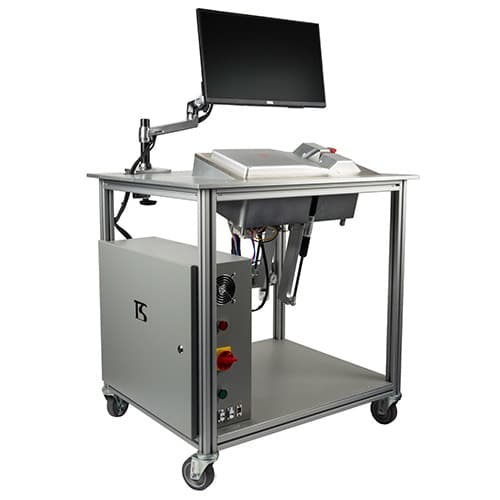
- Compact Design: In crowded manufacturing environments, a modular or benchtop system like the US-3020WS can save valuable floor space while still delivering industrial-grade power.
Conclusion
Choosing the right ultrasonic wire splicer is an investment in the long-term reliability of your automotive wire harnesses. By prioritizing technologies like Closed-Loop Control, ensuring compliance with USCAR-45 standards, and selecting a machine that fits your specific cross-section needs, you can reduce production costs and improve weld quality.
Whether you are looking for an entry-level solution like the TS-20W Plus or a high-performance EV-ready system, TECH-SONIC provides the precision and durability required for the future of automotive manufacturing.
Related Posts: