
Choosing the Right Ultrasonic Metal Welding Machine for Your Industry
Choosing the right ultrasonic metal welding (UMW) machine is a critical decision that directly impacts the quality, consistency, and cost-efficiency of your manufacturing process. Unlike traditional thermal welding, ultrasonic welding uses high-frequency vibrations to create a solid-state bond without melting the base materials. This makes it the gold standard for industries ranging from automotive and electric vehicles (EV) to medical device manufacturing.
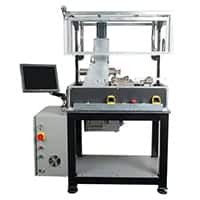
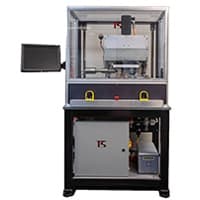
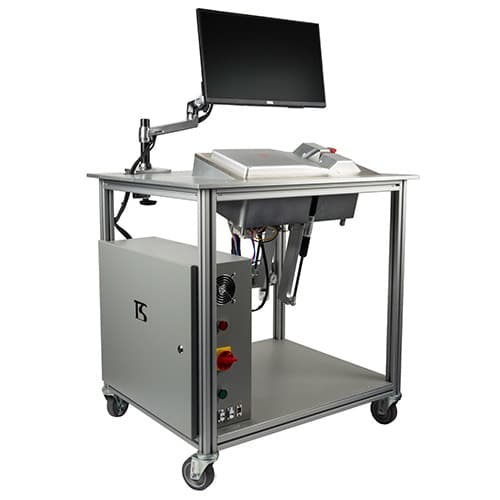
When navigating this complex landscape, TECH-SONIC stands out as an industry leader, particularly known for its pioneering “Closed-Loop Control” (CLC) technology. Here is a comprehensive guide on how to choose the right machine for your specific industrial needs.
1. Identify Your Material and Application
The first step is determining the specific metals you intend to join. Ultrasonic welding is exceptionally effective for non-ferrous metals with high thermal conductivity, such as copper and aluminum.
- Wire Splicing: In the automotive and home appliance sectors, creating reliable wire harnesses is essential. Tech-Sonic’s TS-20W Plus is a staple for wire splicing, offering low maintenance and high reliability.
- Battery Production: For EV battery assembly, welding delicate foil stacks requires extreme precision.
- Tube Sealing: In the HVAC and refrigeration industries, copper and aluminum tubes must be sealed hermetically. The TS20-TS, TS20EX and TS20EX-C models provide a one-step weld-and-cut solution that ensures a leak-proof seal without the need for heat or consumables.
2. Understand the Power of Closed-Loop Control (CLC)
Standard pneumatic ultrasonic welders rely on air pressure, which can fluctuate and lead to inconsistencies. If your industry demands high-precision and zero-defect results, you should look for machines equipped with Closed-Loop Control.
Tech-Sonic’s CLC technology replaces traditional pneumatic cylinders with servo motors. This allows for:
- Multi-Step Welding: You can vary the force and amplitude during a single weld cycle (e.g., pre-conditioning the material before the main weld).
- Unmatched Consistency: By using load cells and encoders, the machine monitors and adjusts in real-time, resulting in a much lower “sigma” value (process variation).
- Extended Tooling Life: The “soft landing” feature of servo-driven heads prevents the horn from slamming into the material, extending the life of your expensive sonotrodes and anvils by 2–3 times.
3. Evaluate Frequency and Power Requirements
Frequency determines the “vibration speed” and is usually chosen based on part size and delicacy:
- 20 kHz: The industry standard. It provides the power and amplitude necessary for larger components like heavy-gauge cables and busbars.
- 35–40 kHz: Ideal for smaller, more delicate parts, such as those found in medical devices or microelectronics. Higher frequencies use lower amplitudes, which reduces the risk of damaging fragile internal components.
Tech-Sonic offers systems across these ranges, including the US-6020FW for high-voltage cable welding (up to 95mm²) and specialized machines for battery pouch cells.
4. Precision Monitoring and Quality Windows
In modern manufacturing, data is king. You need a machine that doesn’t just perform the weld but also verifies it. Choosing a machine with a digital generator and a touch-screen interface allows you to set “Quality Windows.”
If a weld falls outside the programmed parameters for energy, time, or height, the machine can immediately alert the operator or stop the line. This is particularly vital in the EV industry, where a single bad foil weld in a battery pack can lead to a costly failure.
5. Consider Integration and Scalability
Are you looking for a standalone manual workstation or a modular unit to integrate into an automated assembly line?
- Manual Stations: Great for low to medium-volume production or varied tasks.
- Automation Modules: For high-volume environments, look for compact designs that can be easily mounted onto robotic arms or integrated into rotary dial tables.
Why TECH-SONIC?
Choosing a partner is as important as choosing a machine. Based in Dublin, Ohio, Tech-Sonic provides more than just hardware; they offer “Free Sample Testing” to ensure their technology works for your specific parts before you buy. Their focus on CLC technology has effectively solved the “Holy Grail” of ultrasonic welding: achieving total process control.
By focusing on the specific needs of your materials, the precision offered by servo-driven technology, and the support of a reputable manufacturer, you can ensure your investment in ultrasonic metal welding pays off through higher yields and superior product quality.
Related Posts: