
Precision and Efficiency: The Role of Ultrasonic Metal Tube Sealing in Modern HVAC and Refrigeration
In the rapidly evolving landscape of HVAC and refrigeration (HVAC&R) manufacturing, the demand for leak-proof, durable, and environmentally friendly sealing solutions has never been higher. As the industry moves away from traditional torch-based methods toward more automated, “green” technologies, ultrasonic metal tube sealing has emerged as a gold standard.
By leveraging the engineering principles outlined by the American Society of Heating, Refrigerating and Air-Conditioning Engineers (ASHRAE) and the cutting-edge technology from TECH-SONIC, manufacturers are transforming how refrigeration circuits are hermetically sealed.
The Shift from Brazing to Ultrasonic Sealing
Traditionally, sealing the process tubes of air conditioners and refrigerators involved brazing—a high-heat process using a filler metal. While effective, brazing presents several challenges in a modern production line. It requires open flames, introduces contaminants like flux into the system, and can weaken the structural integrity of the copper tubing due to extreme thermal stress.
Ultrasonic sealing, by contrast, is a solid-state process. As highlighted by TECH-SONIC’s technology, it uses high-frequency vibrations to create a metallurgical bond between the tube walls without melting the metal. This “cold” weld eliminates the risk of oxidation inside the pipe, a critical factor for maintaining the chemical stability of the system.
Meeting ASHRAE Standards for System Integrity
ASHRAE sets the benchmark for refrigerant system safety and performance. Specifically, ASHRAE Standard 97 emphasizes testing the chemical stability of materials within refrigerant systems. One of the biggest threats to this stability is the presence of moisture or contaminants introduced during the sealing process.
Because ultrasonic sealing does not require flux or high heat, it prevents the formation of cupric oxide—a common byproduct of brazing that can flake off and clog delicate expansion valves or contaminate the compressor oil. Furthermore, as the industry transitions to A2L and natural refrigerants (like R290 and R600a)—which can be flammable—eliminating open flames on the production floor is not just a preference; it is a safety imperative that aligns with ASHRAE’s rigorous safety classifications.
Key Benefits of TECH-SONIC Ultrasonic Technology
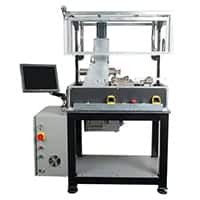
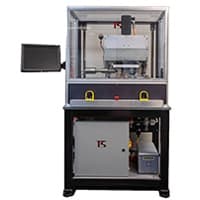
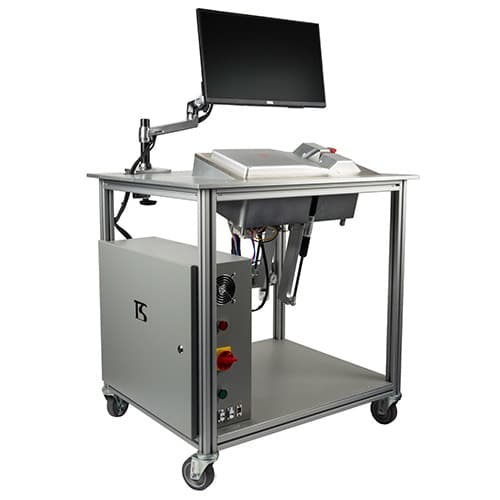
TECH-SONIC’s lineup, including the TS-20TS EX and TS-20TSEX-C (Explosion Proof) model, is specifically designed for the demands of high-volume HVAC&R manufacturing. Here are the primary advantages:
- Hermetic Reliability: The process provides a “one-step weld and cut” operation. The machine crimps the tube, welds it shut, and cuts off the excess in under a second. This creates a surface-molecular bond that is significantly more resistant to vibration-induced leaks than a brazed joint.
- Energy Efficiency: According to TECH-SONIC, ultrasonic welding uses roughly 20 times less energy than resistance welding and a fraction of the energy required to maintain a brazing furnace or torch setup.
- Process Control: Unlike the manual variability of a torch-wielding operator, ultrasonic sealers offer digital control. Parameters like energy, time, and weld height are monitored for every single seal. This ensures that every unit leaving the factory meets the same high-quality threshold.
- No Consumables: There is no need for silver solder, gas, or flux. Once the initial investment is made in the sonotrode (the welding horn), the cost per weld is drastically lower than traditional methods.
Applications in the Field
In the HVAC&R industry, ultrasonic tube sealers are primarily used for:
- Refrigerator Charging Lines: Sealing the process tube after the refrigerant charge has been completed.
- Air Conditioning Units: Hermetically closing service ports in split systems and window units.
- Capillary Tubes and Sensors: Providing precision seals on delicate, thin-walled components where high heat would cause damage.
Future-Proofing the Manufacturing Line
As global regulations tighten around refrigerant leakage (such as those monitored by ASHRAE), the precision of the seal becomes a competitive advantage. Manufacturers who adopt ultrasonic technology reduce their “rework” rates and practically eliminate the environmental hazards associated with “leakers” in the field.
By integrating TECH-SONIC’s advanced ultrasonic solutions, HVAC&R companies are achieving a rare trifecta: increased worker safety, reduced operational costs, and superior product longevity. In an industry where a single microscopic leak can lead to a total system failure, the move toward ultrasonic metal tube sealing is not just a trend—it is the future of refrigeration.
Related Posts: